Introduction
Hand pain can affect nearly every aspect of daily life. From typing on a keyboard and gripping a coffee mug to driving a car or carrying groceries, our hands are involved in countless activities throughout the day. When pain develops, even the simplest tasks can become challenging and frustrating.
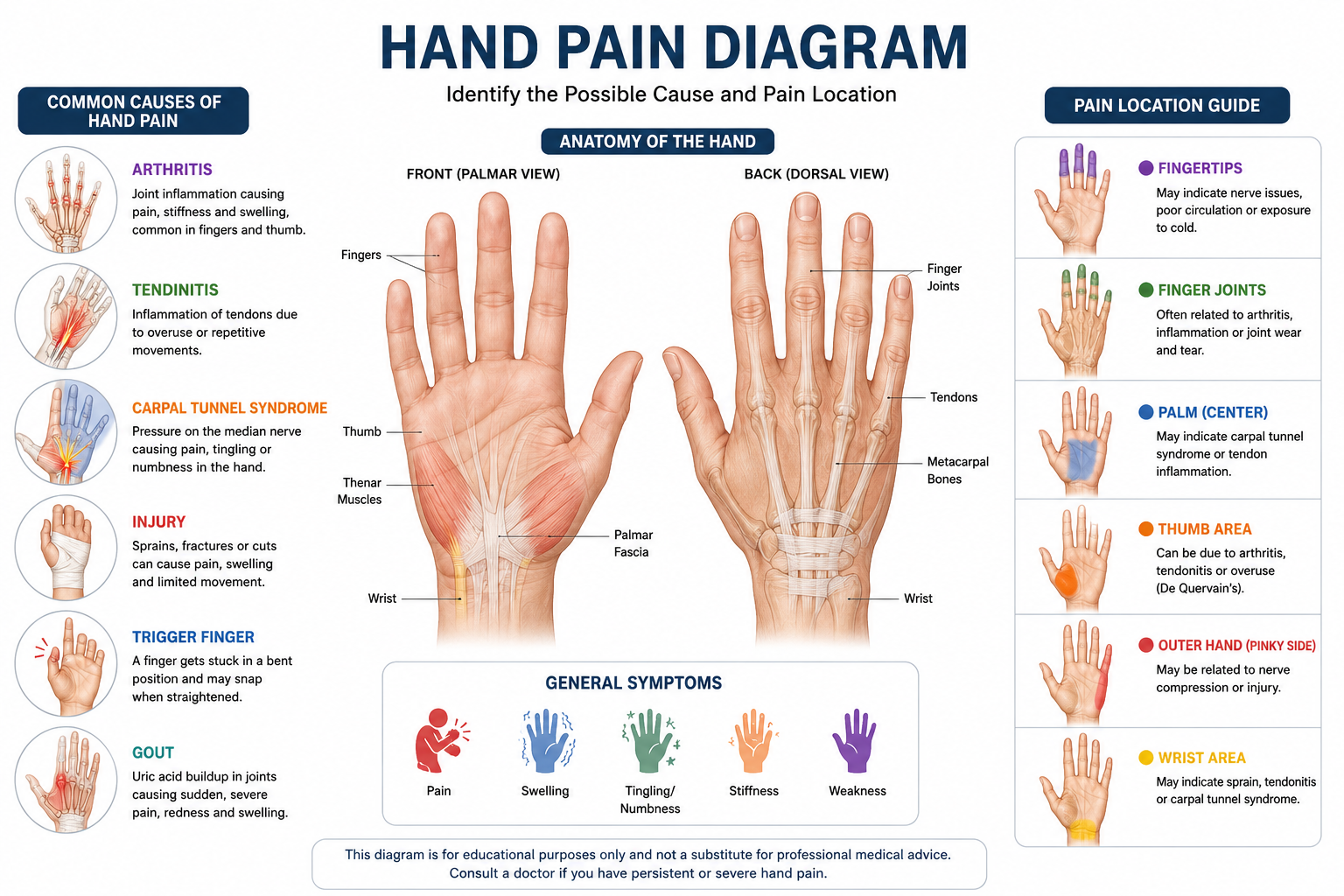
One of the most effective ways to understand discomfort in the hand is by using a hand pain diagram. A hand pain diagram helps identify specific pain locations and connects those areas with potential underlying conditions. Whether the pain is located in the thumb, palm, fingers, knuckles, wrist, or back of the hand, the exact location often provides valuable clues about what might be causing the problem.
Healthcare professionals frequently use hand pain diagrams during evaluations because they simplify the diagnostic process. By pinpointing where symptoms occur, patients can communicate their concerns more accurately, leading to better treatment recommendations and faster recovery.
In this guide, we’ll explore how a hand pain diagram works, what different pain locations may indicate, common causes of hand pain, treatment options, and ways to prevent future discomfort.
What Is a Hand Pain Diagram?
A hand pain diagram is a visual representation of the hand that highlights different anatomical regions where pain may occur. It serves as a useful reference tool for patients, therapists, and healthcare providers who want to identify the source of discomfort.
The diagram typically divides the hand into several sections, including the fingers, thumb, palm, knuckles, wrist area, and the back of the hand. By marking the exact location of pain, individuals can better understand which muscles, tendons, ligaments, nerves, or joints might be involved.
Many medical clinics and rehabilitation centers use hand pain diagrams during assessments. Patients are often asked to shade or mark painful areas, helping clinicians narrow down potential diagnoses. This simple visual approach can reveal patterns that may not be obvious through verbal descriptions alone.
Another benefit of a hand pain diagram is that it helps distinguish between localized and widespread pain. For example, pain limited to the thumb may suggest a different issue than pain affecting multiple fingers and the wrist simultaneously.
Understanding the Main Areas of a Hand Pain Diagram
The hand contains numerous structures working together to provide strength, flexibility, and precision. Understanding each area on a hand pain diagram can make it easier to identify potential causes of discomfort.
Pain in the fingers may stem from joint inflammation, tendon injuries, nerve compression, or repetitive strain. Conditions such as arthritis, trigger finger, and tendonitis commonly affect finger joints and tissues.
The thumb is another frequent source of hand pain. Since the thumb is responsible for gripping and pinching motions, it experiences considerable stress throughout daily activities. Thumb pain may indicate arthritis, ligament injuries, or overuse-related conditions.
The palm contains important tendons, muscles, and nerves. Pain in this region can result from tendon inflammation, nerve compression syndromes, or trauma. Individuals who perform repetitive gripping activities often experience discomfort in the palm.
Knuckle pain often points toward joint-related conditions. Arthritis, injuries, and inflammatory disorders commonly affect these structures. Meanwhile, pain on the back of the hand may involve extensor tendons, fractures, or soft tissue injuries.
Understanding these anatomical regions helps make a hand pain diagram a practical tool for identifying possible causes and directing appropriate treatment.
Hand Pain Diagram: Finger Pain and What It May Mean
Finger pain is one of the most common complaints highlighted on a hand pain diagram. Because fingers contain multiple joints, tendons, and nerves, several conditions can trigger discomfort in these areas.
Arthritis is a leading cause of finger pain. Osteoarthritis develops when cartilage gradually wears away, resulting in stiffness, swelling, and aching joints. Rheumatoid arthritis can also affect finger joints, causing inflammation and deformities over time.
Trigger finger is another condition frequently associated with finger pain. It occurs when a tendon becomes irritated and inflamed, making finger movement difficult. Individuals may notice a clicking or locking sensation when bending or straightening the affected finger.
In some cases, finger pain originates from nerve-related problems. Compressed nerves can produce tingling, numbness, burning sensations, and weakness. Carpal tunnel syndrome, although commonly associated with the wrist, often causes symptoms that extend into the fingers.
Because finger pain can arise from many sources, using a hand pain diagram helps narrow down the specific structures that may be contributing to symptoms.
Thumb Pain on a Hand Pain Diagram
The thumb plays a critical role in hand function, making thumb pain particularly disruptive. On a hand pain diagram, thumb discomfort often appears near the base joint, side of the thumb, or along the tendons.
One of the most common causes of thumb pain is thumb arthritis. This condition affects the carpometacarpal (CMC) joint at the base of the thumb. Individuals frequently experience pain while gripping, twisting, opening jars, or holding objects.
De Quervain’s tenosynovitis is another common source of thumb pain. This condition involves inflammation of tendons running along the thumb side of the wrist. Repetitive hand movements often contribute to its development.
Thumb injuries can also appear on a hand pain diagram. Ligament sprains, fractures, and sports-related injuries may cause swelling, bruising, and reduced range of motion. Depending on the severity, medical evaluation may be necessary to prevent long-term complications.
Recognizing the exact location of thumb pain can significantly improve the accuracy of diagnosis and treatment planning.
Palm Pain and Its Common Causes
Palm pain can be especially uncomfortable because it affects gripping strength and hand function. On a hand pain diagram, palm pain may appear in the center of the hand or near the base of the fingers.
One potential cause is tendonitis, which occurs when tendons become inflamed due to repetitive use. People who frequently use tools, perform manual labor, or engage in repetitive hand motions are particularly susceptible.
Another possible cause is Dupuytren’s contracture. This condition causes thickened tissue beneath the skin of the palm, leading to finger contractures over time. Although it may begin as a small lump, it can gradually affect hand mobility.
Nerve compression can also contribute to palm discomfort. Conditions involving irritated or compressed nerves may produce burning, tingling, or aching sensations that extend throughout the hand.
Since palm pain can interfere with many daily activities, early assessment and appropriate treatment are important for maintaining hand function.
Knuckle Pain on a Hand Pain Diagram
Knuckle pain often appears prominently on a hand pain diagram and may indicate joint-related issues. The knuckles endure significant stress during gripping, lifting, and repetitive movements, making them vulnerable to injury and degeneration.
Osteoarthritis frequently affects the knuckles, especially in older adults. Over time, cartilage deterioration can lead to stiffness, swelling, and reduced flexibility. Symptoms often worsen after periods of activity.
Inflammatory conditions such as rheumatoid arthritis may also target the knuckle joints. Unlike osteoarthritis, rheumatoid arthritis involves the immune system attacking joint tissues, resulting in chronic inflammation and progressive damage.
Traumatic injuries are another common source of knuckle pain. A direct impact, fall, or sports-related accident can cause sprains, fractures, or soft tissue damage. Swelling and bruising often accompany these injuries.
Understanding knuckle pain patterns on a hand pain diagram can help determine whether the issue stems from inflammation, degeneration, or injury.
Wrist and Hand Connection on a Hand Pain Diagram
Although the wrist is technically separate from the hand, many hand pain diagrams include the wrist because problems in this area frequently affect hand function.
Carpal tunnel syndrome is one of the most recognized wrist-related conditions. It occurs when the median nerve becomes compressed within the carpal tunnel. Symptoms often include numbness, tingling, weakness, and pain that extends into the fingers.
Tendonitis can also affect the wrist and surrounding structures. Repetitive movements, sports activities, and occupational tasks commonly contribute to inflammation and discomfort.
Wrist fractures, sprains, and ligament injuries may produce pain that radiates into the hand. Even after the initial injury heals, lingering stiffness and weakness can persist if proper rehabilitation is not completed.
By examining both wrist and hand symptoms together, healthcare providers can gain a more complete understanding of the underlying problem.
Common Conditions Identified Through a Hand Pain Diagram
A hand pain diagram can help identify several common medical conditions. While it is not a replacement for professional diagnosis, it often serves as a valuable starting point.
Arthritis remains one of the most frequently identified causes of hand pain. Both osteoarthritis and rheumatoid arthritis can affect multiple hand joints and significantly impact mobility.
Carpal tunnel syndrome is another common condition associated with specific pain patterns. Symptoms often involve the thumb, index finger, middle finger, and part of the ring finger.
Tendonitis frequently appears in individuals who perform repetitive motions. Pain may develop gradually and worsen during activity. Depending on the affected tendon, symptoms can occur in the fingers, thumb, palm, or wrist.
Nerve-related disorders, fractures, ligament injuries, and overuse syndromes can also be recognized through careful interpretation of a hand pain diagram.
Diagnosing Hand Pain Accurately
While a hand pain diagram provides useful clues, an accurate diagnosis typically requires a comprehensive evaluation. Healthcare providers consider several factors, including symptom location, duration, severity, and associated signs.
Physical examination is often the first step. Clinicians assess joint mobility, grip strength, tenderness, swelling, and nerve function. These findings help narrow down potential causes.
Imaging tests may be recommended when structural abnormalities are suspected. X-rays can reveal fractures and arthritis, while MRI scans provide detailed views of soft tissues such as tendons and ligaments.
In some situations, nerve conduction studies or ultrasound imaging may be necessary. These diagnostic tools help identify nerve compression and soft tissue disorders that might not be visible on standard imaging.
Combining clinical findings with information from a hand pain diagram often leads to more accurate and efficient diagnosis.
Treatment Options for Hand Pain
Treatment depends largely on the underlying cause of the pain. Fortunately, many hand conditions respond well to conservative therapies.
Rest is often one of the most effective initial treatments. Reducing activities that aggravate symptoms allows inflamed tissues time to heal. Temporary activity modification can significantly reduce discomfort.
Ice therapy can help decrease swelling and inflammation, especially after injuries or repetitive strain. Applying ice for short periods throughout the day may provide symptom relief.
Physical therapy and hand therapy programs are frequently recommended. These specialized exercises improve flexibility, strengthen supporting muscles, and promote recovery without placing excessive stress on the affected structures.
In some cases, medications such as anti-inflammatory drugs may be used to manage symptoms. More advanced conditions may require injections, splinting, or surgical intervention when conservative treatments fail.
Preventing Hand Pain and Future Injuries
Preventing hand pain is often easier than treating chronic problems after they develop. Small adjustments in daily habits can have a significant impact on long-term hand health.
Maintaining proper ergonomics is essential, particularly for individuals who spend long hours typing or performing repetitive tasks. Proper workstation setup can reduce stress on the hands and wrists.
Regular stretching exercises help maintain flexibility and reduce muscle tension. Gentle hand and finger stretches can improve circulation and decrease the risk of overuse injuries.
Using appropriate tools and equipment can also minimize strain. Ergonomic handles, supportive braces, and adaptive devices may help distribute pressure more evenly across the hand.
Finally, paying attention to early symptoms is critical. Addressing minor discomfort before it becomes severe often prevents long-term complications and preserves hand function.
Conclusion
A hand pain diagram is an incredibly valuable tool for understanding where pain occurs and what it may indicate. By identifying specific pain locations within the fingers, thumb, palm, knuckles, wrist, and back of the hand, individuals can gain insight into potential underlying conditions.
Whether the issue involves arthritis, tendonitis, nerve compression, injury, or repetitive strain, recognizing pain patterns can support earlier diagnosis and more effective treatment. While a hand pain diagram cannot replace professional medical evaluation, it serves as an excellent starting point for understanding symptoms.
If hand pain persists, worsens, or interferes with daily activities, consulting a healthcare professional is always recommended. Early intervention often leads to better outcomes, faster recovery, and improved quality of life.